Paraguay: Voting Away Freedom

Dictatorship and socio-economic bias have left Latin America home to some of the most corrupt nations in the world. Despite the continent’s recent relative success in economic development and securing regional trade agreements, 20th century political scourges still haunt many Latin American nations and Paraguay is no exception. For 35 years the nation endured a period in which popular peaceful dissent was met with the strong-arm of the military. Extralegal arrests and humans rights abuses were commonplace, and the housing of Nazi war criminals was an accepted practice. Paraguayan President Horatio Cartes’ renewed bid last week for re-election risks forfeiting the strides made towards real democracy over the past decade and may force the government back into political crisis.

While Paraguay’s political future remains in doubt, the facts surrounding the events of the 31 March are not in dispute. A majority group from the Senate and a hand-full of opposition senators met secretly to cast a majority vote to put into motion the first steps necessary to amend the Paraguayan constitution. The amendment would enable President Cartes to seek a second term in contravention of the single-term limit originally imposed to bolster Paraguay’s democratic processes. The proposition could further entrench Cartes’ Colorado Party that has enjoyed a majority in the legislature for 66 of the last 70 years.  After 35 years of despotic rule by dictator Alfredo Stroessner, the people of Paraguay were outraged by this legislative “coup d’etat” which sparked a protest at the Congressional building in Asunción.

In the melee that followed, a large portion of the building was gutted by fire and Rodrigo Quintana, the leader of the Liberal Party’s youth branch, had been shot dead. The details surrounding the incident are dubious, if not damning. Quintana was shot and killed in a violent police raid on the Liberal Party’s Youth Branch political headquarters. Security footage shows Quintana running away from the police.  After absorbing the deadly shot, an officer now identified as agent Gustavo Florentin approached and stepped on his body. Florentin has since been fired, along with the interior minister and Paraguay’s police commander, Crispulo Sotelo. While these dismissals direct blame towards the police for an inability to protect Congress and the public, the truth is this action by President Cartes was more preventative than altruistic. The calculated move precludes the possible violent reaction from an already agitated opposition but the risk of repeated violence endures until negotiations surrounding the amendment begin and until transparent government investigation of the police raid lifts the perception of impunity.
paraguay protest
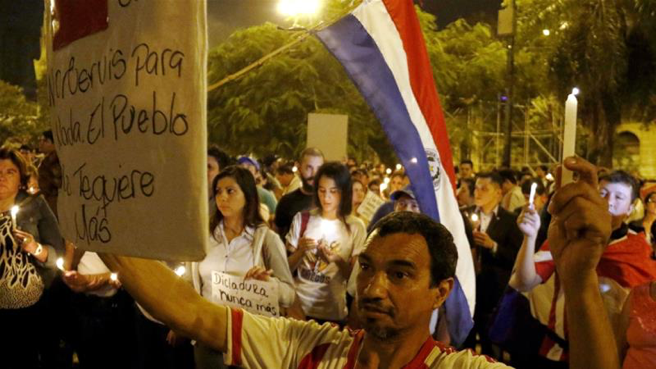
Protestors peaceful after a previous night’s clashes left Congress in flames. Photo credit: http://www.aljazeera.com/news/2017/04/paraguay-delays-election-vote-fresh-protests-170404053715500.html

A Vote Against Confidence

The Colorado party will likely argue that the vote was an inadvertent procedural violation of legislative etiquette. The opposition, along with the neighbors and trade partners, will view the covert legislative action as a power grab and a sure indicator that a corrupt polity is leading the small land-locked country backward in already uncertain economic times. A procedural violation can be dealt with within the democratic process, but a substantive and willful disregard for democratic governance spells a disastrous outcome.

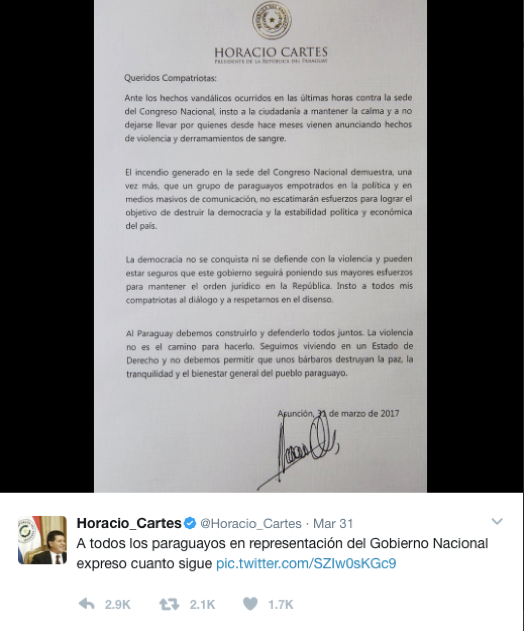
To understand the level of risk being taken and the importance of the upcoming events, one needs only to look at who responds and what is said. Immediately after the violence, President Cartes downplayed the events in a letter to the people of Paraguay. In the third paragraph he writes: “Democracy is not conquered or defended with violence and you can be sure this government will continue to put its best effort into maintaining order in the republic…we must not allow a few barbarians to destroy the peace, tranquility and general well-being of the Paraguayan people.” His cavalier statement was met with disdain by the United Nations Office of the High Commissioner for Human Rights (OHCHR), which quickly issued a pointed cautionary statement calling on political leaders “to avoid inciting violence and seek dialogue.” Although innocuous at first glance, the OHCHR statement avoids addressing the protestors or their actions and instead directly engages political leaders for “inciting violence”.
Paraguay protest
President Horacio Cartes tweeted this photo of a letter drafted in response to the protests of 31 March.

The Paraguayan Congress remains shut down while fire inspectors assess the damage. With a populace fighting widespread corruption of government officials, broken promises for rebuilt infrastructure, and frustration over lack of progress, even Asuncion’s own mayoral race was lost to the opposition party. Pope Francis of neighboring Argentina has called for immediate dialogue between opposing parties and President Cartes has heeded the advice, recommending to the lower house (presumably pro-amendment) to delay until the factions could discuss a way forward for the initiative. Opposition leader Efrain Alegre objected, pending a comprehensive investigation into the events surrounding Quintana’s death. The bipartisan call to delay the vote, originally scheduled for April 4th, further obscures the path forward and and tensions continue to rise. Further delay could unravel an uneasy peace maintained since Cartes assumed the Presidency in 2013.

Despite all evidence pointing to the impossibility of withdrawing the proposal and annulling the clandestine senate vote, there is still a chance that diplomacy and influence from neighboring countries could prevail. Since President Cartes’ election, Paraguay has experienced a surge in economic growth, making it one of South America’s fastest growing economies. This glimmer of hope would lead one to believe that the Colorado party should abandon the measure and seek a strong replacement for Cartes in 2018, restoring peace and trust in a nation still racked with fear of a return to despotism. The unfortunate truth is that the prospect of political gain and notoriety is alluring, and the risk to the political certainty of the country is high. The most promising course of action towards maintaining peace would be for Cartes to go against the majority, adhere to the current constitution, and eliminate himself as a candidate in the next election. This also appears the most unlikely scenario, as it would put an end to the right-wing preeminence that the Coloradan majority has enjoyed for decades.

Point of Inflection

In the absence of immediate and powerful diplomatic intervention or reversal by Congress, Paraguay faces a crossroads in which violence and freedom could become interdependent. The lower house will, if allowed to vote, pass the measure and send the constitutional amendment to the President for approval. If the recent violence following the initial vote is any clue to how the opposition will react, the ensuing fear and anger will undoubtedly thrust this tiny nation into a state of complete chaos. The ingredients exist for a violent implosion: a new police commander, a new interior minister, complete right-wing control without term limits, and a populace that has tasted freedom and democracy even if only for a brief period of time.

The upcoming weeks are crucial for determining the future prospect of peace and economic growth, both for Paraguay and for greater Latin America. Absent any legislative reversal on the initiative, the nation is on a collision course. The tragic and too-familiar possibility of a counter-revolutionary dictator rising from the ashes is greater now than at any point since Stroessner’s final days in 1989.


Major Kirby “Fuel” Sanford is a U.S. Air Force F-16 Instructor Pilot with combat experience in Syria, Iraq, and Afghanistan. He is currently a master’s student in Buenos Aires, Argentina. The views expressed in this article are those of the author and do not reflect the official policy or position of the U.S. Air Force, the Department of Defense, or the U.S. Government.

LOL: The Art of Assassination

On the morning of 14 February 2017, a grainy closed circuit television video shows a middle-aged Korean man striding casually into the Low Cost Carrier Terminal (LCCT) of Kuala Lumpur International Airport. He is approached from behind by a young woman in a white t-shirt and blue skirt and in a flash she throws a cloth over his face to administer a lethal dose of a colorless, odorless liquid. The victim, Kim Jong Nam, is the estranged half-brother of North Korean leader Kim Jong Un. He did not yet realize he was already doomed; assassinated by unknown assailants wielding an unidentified chemical weapon. The ongoing international manhunt that followed revealed the greatest strengths of the storied Royal Malaysian Police Special Branch and the brutality and skill of the North Korean intelligence service. The incident also strained relations between Pyongyang and one of the few countries in the world with which it enjoys normal relations.

The brazen murder also captivated millions and brought a shadowy underworld briefly to the surface. What is not apparent to most is that last week’s dramatic events were not a lucky strike by clever opportunists, they were the end result of a sophisticated intelligence operation – actually several separate operations – spanning multiple countries and likely involving dozens of intelligence officers and their agents. (In the professional jargon of the intelligence community, an agent is someone recruited by an intelligence officer.) Coordinating their activities to achieve the final spectacular, and previously impossible result is the real art behind the assassination.

The Cat and the Mouse

Once considered a likely successor to his father, Kim Jong Il, Kim Jong Nam was passed-over following a careless indiscretion and went quickly into exile while his younger sibling thrashed about in the tense early days of his rule. Despite great doubt about his ability to muster the ruthlessness required to retain power over the isolated country, Kim Jong Un quickly consolidated his hold using imprisonment and death to control anyone presenting the slightest political threat. In an environment where even kinship was less important than loyalty, Kim Jong Nam was bound to be targeted even if he had not made statements questioning the stability of his brother’s regime.

Nam Assassination
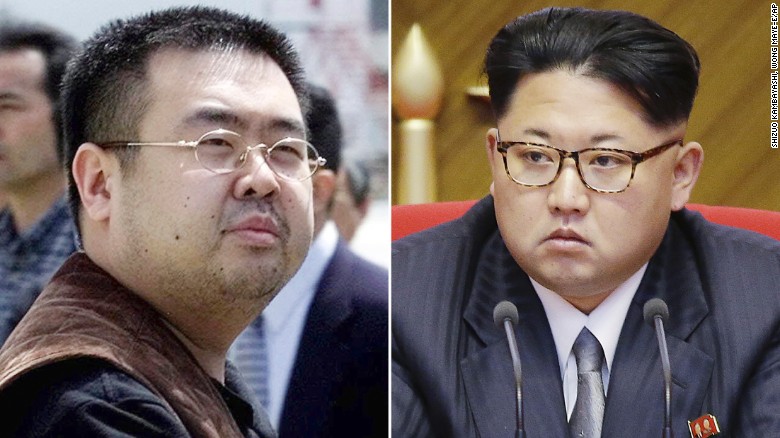
Before his fortunes faded, Kim Jong Nam (left) was the presumptive heir to North Korean leader Kim Jong Il. Now his half-brother, Kim Jong Un (right), leads the country. Photo credit: http://www.telegraph.co.uk/news/2017/02/15/exclusive-two-female-secret-agents-behind-murder-kim-jong-unsbrother/

The elder Kim withdrew deeper into a dark exile after his father’s death in 2012. In China and Macau he was assumed to be under state protection and travelled under numerous aliases. He had already survived at least two attempts on his life and reportedly begged his half-brother to spare his life and that of his family. His final minutes in Kuala Lumpur were a bizarre drama. After being assaulted by the woman in white, he was initially treated at an airport clinic before being evacuated by ambulance to a local hospital. He died en route, just as police were beginning their hunt for his alleged attackers, an Indonesian girl – Siti Aisyah – and a Vietnamese national, Doan Thi Huong, the now infamous woman wearing the coldly ironic “LOL” t-shirt.

After her attack on Kim Jong Nam, CCTV footage shows Doan calmly leaving the scene and catching a taxi outside. Despite having just administered a lethal dose of an unknown chemical, she displayed no concern for her own safety and wore no obvious protective equipment. She had clearly practiced the sequence. Both Doan and Siti Aisyah later told police separately they believed they were taking part in a made for television prank. But Doan’s actions in the 48 hours prior to the attack suggest she had received some training in tradecraft. During that time she stayed in three hotels in the immediate vicinity of the airport and paid cash for her lodging. At one point she borrowed a pair of scissors and cut her hair, leaving the remnants in the trash can in her room. Her activities during the day are just coming to light but are now known to have included numerous rehearsals and examinations of the target area; possibly in conjunction with Siti Aisyah. These are classic, if clumsy techniques to avoid detection and rehearse the operation. They certainly signal a nefarious intent.

The Art of Assassination

To the casual observer, Kim Jong Nam’s death may seem like the handiwork of a couple clever and highly trained operatives. The reality is that intelligence operations of this kind are highly choreographed, involve dozens of actors, and are compartmented for security. Assassinating Kim Jong Nam required at least five, and as many as seven separate operations managed by seven or more intelligence officers with perhaps dozens of agents in Macau, China, Malaysia, Vietnam, and Indonesia. The overall operation likely consisted of the following supporting operations:

  • Recruit the assassins. Siti Aisyah was recruited in Indonesia. Doan may have been recruited in Vietnam.
  • Determine Kim Jong Nam’s travel plans. Doan was aware of Kim Jong Nam’s travel plans at least 48 hours prior to the attack. She used this time to rehearse and to complete her reconnaissance. Information gleaned from his social media feed is not reliable enough for this purpose and had to be corroborated with direct knowledge from intercepted communications or recruited agents in a position to provide assured access to his itinerary.
  • Report Kim Jong Nam’s movements. The attack required very precise information about his flight, his mode of transportation, his likely arrival time at the terminal, the gate/check-in counter for his flight, what he was wearing, etc.; all of which had to be communicated to the assassins in a timely manner. A botched operation would have been far too damaging to leave this to chance. This could have been as simple as a phone warning from his hotel but doing this reliably requires layers of mobile and static surveillance at the hotel, the airport, and his many residences.
  • Deliver the chemical. The chemical used to kill Kim Jong Nam was smuggled into Malaysia or manufactured locally. It likely required special skill to make and specific equipment to store and administer. For Security, Doan would have received the chemical secretly and been trained in its use at the last possible moment raising the risk it could have killed bystanders or the assassins themselves.
  • Kill Kim Jong Nam. There is a possibility Doan and Siti Aisyah may have been employed separately to ensure redundancy. They may even have been unaware of each other’s activities. The leaked CCTV footage of the attack supports this conclusion, though there is new information that they rehearsed the attack together.
  • Observe and report the outcome. Though this could have been conducted overtly through North Korean diplomats and/or monitoring of the press, it is a critical piece. At a minimum, Doan needed to report her task complete or a separate observer had to be in place at the scene to do so. Emerging information suggests this was the task of the four North Korean nationals still sought by Malaysian police.
  • Exfiltrate the assets. The four remaining fugitives all left Malaysia within a few hours of the operation. They took circuitous routes back to North Korea via Indonesia, Dubai, Russia, and elsewhere. Their roles are not certain but probably also included passing intelligence and issuing final orders. One, Ri Jong Chol, remained in Kuala Lumpur and was apprehended Monday. Doan and Siti Aisyah seemed to lack viable escape plans. It is possible they were left as a diversion to throw investigators off the trail of fleeing North Korean intelligence officers.
assassination malaysia
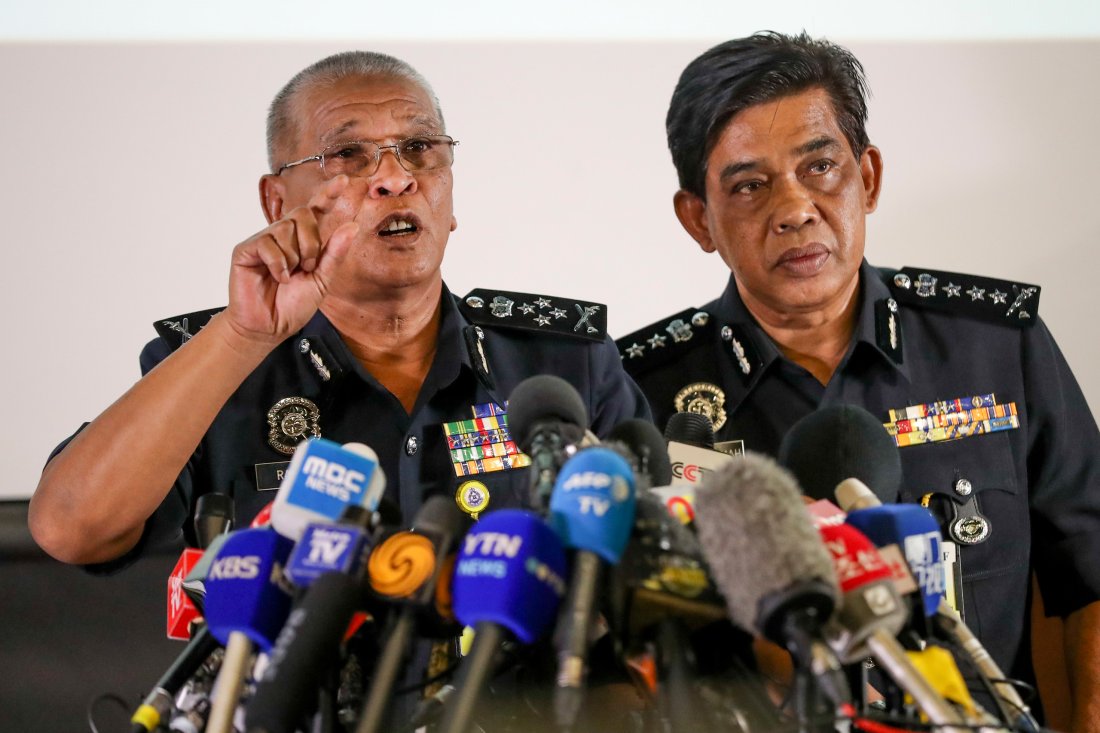
Deputy National Police Chief of Malaysia Noor Rashid Ibrahim, left, speaks as Selangor Police Chief Abdul Samah Mat listens during a press conference at the Bukit Aman national police headquarters in Kuala Lumpur, Malaysia, Sunday, Feb. 19, 2017. Photo credit: AP Photo/Vincent Thian, http://time.com/4676018/kim-jong-nam-death-north-korea-suspects/

Though it was possible to conduct some of the supporting operations above clandestinely, meaning the operations themselves remain hidden, the politically explosive death of Kim Jong Un’s half-brother could never be kept secret and therefore had to be done covertly, meaning the sponsor’s hand remains hidden. A covert operation is much more difficult to execute than a clandestine one and requires layers of separation between intelligence officers and their agents that are typically not highly trained operatives. Agents are deniable and sometimes coerced. Occasionally they do not know whom they are working for or even that they are working for someone at all.

As an additional security measure, the supporting operations would be kept completely separate. The risk of detection is highest when these operations come together through communications or physical contact, meaning the moment of greatest vulnerability was during the attack itself when all the pieces were brought together in time and space. At that point, all the complicated designs of the North Korean regime rested on the element of surprise and the skill and demeanor of half-trained agents.

Ultimately, the assassination of Kim Jong Nam was a well-planned and skillfully executed intelligence operation, but the Royal Malaysian Police Special Branch is untangling the knot with great efficiency. With its roots in the long, difficult fight against Communist insurgency, Special Branch is a tough adversary in the ongoing spy game. Known locally as SB, Special Branch serves as both the internal and external intelligence service of the Malaysian state. They enjoy good relationships with counterparts in the region and are receiving excellent mutual support from Malaysia’s Foreign Ministry which is aggressively setting the conditions for international cooperation in the investigation. Though culpability for Kim Jong Nam’s death may never be fully proven, SB has managed to minimize political damage to Malaysia and imposed a high cost on North Korea. With the dust still settling, only Kim Jong Un himself can say if his brother’s murder was worth the resultant damage to relations with Malaysia and the increased suspicion that the operation has inspired around the world.


Lino Miani is a retired US Army Special Forces officer, author of The Sulu Arms Market, and CEO of Navisio Global LLC. He provided expertise in special and intelligence operations to NATO from 2013-2016. Read about one of his encounters with the North Koreans in Kuala Lumpur.

Onward and Upward: Looking Back on 2016

Here at The Affiliate Network, wrapping up 2016 means looking back on the year to examine the issues that mattered most to the world, keeping in mind our goal to inform our readers, foster debate about the substance of global issues, and promote the expertise of our Affiliates.

With such a tumultuous year, our Affiliates had plenty to discuss about the year’s events. We published 13 pieces by contributors from around the world, each Affiliate lending their own unique perspective on issues in international policy, security, and diplomacy.

Human Security vs. National Security

The conflicts of 2016 continue to highlight the human cost of war and underscore the increasingly uncomfortable reality that some governments prioritize national security over the safety and wellbeing of their constituents. The fight against Daesh is a good example, leaving a trail of civilian victims in its wake and begging the question how the rest of the world can help the helpless in this terrible conflict. The atrocities in Syria and Iraq – as well as the resultant flight of tens of thousands of refugees to Western Europe – will be increasingly difficult to ignore.

Unfortunately, discussions of immigration in Europe often segue into concerns over terrorism. The year was marked by a rise in terror attacks across the globe, particularly in Europe. The Brussels Airport bombing in particular represented a decision point for the western world in the fight against terror. Stemming from this event and growing questions of interregional border security, Europe grapples with the realities of an increasingly complex security situation. Rein Westra underscores the importance of adapting to this circumstance in Securing Trade and Transportation.

As Navisio Global’s CEO, Lino Miani, highlights in a series of articles on the fight against Daesh, humanitarian concerns and terrorism in Europe are only one aspect of the challenges in the Middle East. In Making Mosul Great Again and The Gate, Lino describes the unfathomable strategic importance of two individual cities in Syria and Iraq as Russia, Turkey, the United States, Iran, and NATO wage what some believe is a proxy struggle for influence in the Middle East.

Nationalism & Populism in 2016

The presidential election in the United States captured attention the world over, but it was not the only political transition in the news. In Let’s Change, Jon Nielsen wrote about the end of the Kirchners and Peronism in Argentina. Though Argentina may be ending its tradition of power transfer from husband to widow, Mugabe’s Heart explores how long-time president of Zimbabwe, Robert Mugabe, may be following the same playbook as the Kirchners.

http://uk.businessinsider.com/eu-referendum-poll-brexit-beckons-as-97-of-britons-think-david-cameron-cant-get-a-deal-2015-5
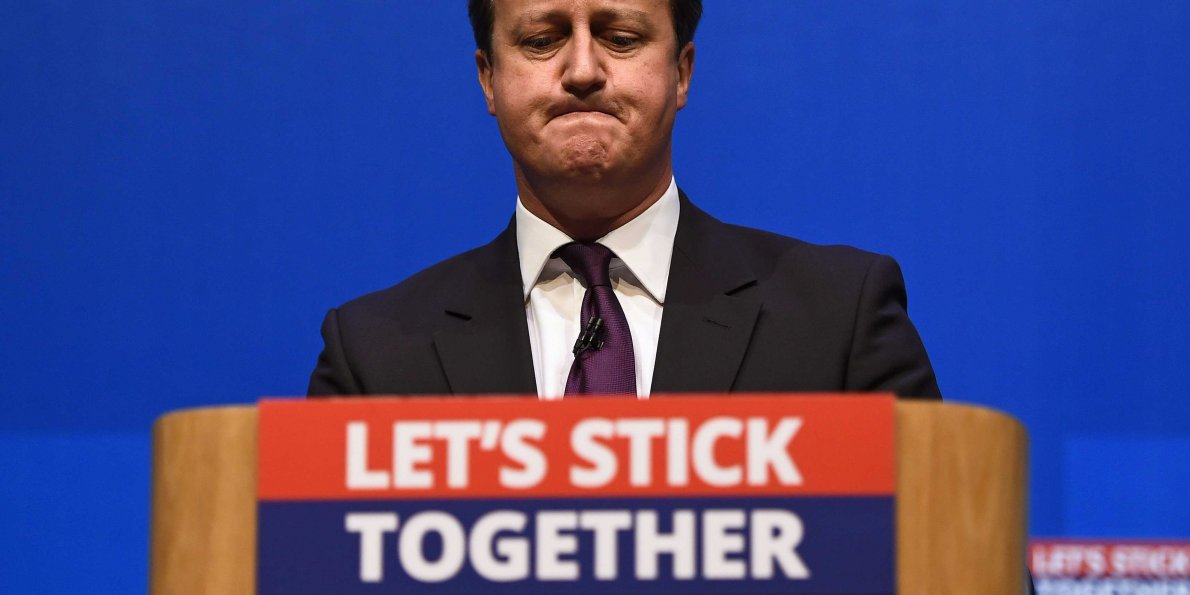
Former British Prime Minister David Cameron stepped down as a result of a failed campaign to keep the United Kingdom in the EU

Elections were not the only political events captivating audiences in 2016. In the United Kingdom, the referendum to leave the European Union, also known as “Brexit”, dominated headlines and may have inspired similar movements throughout Europe. Prime Minister Matteo Renzi resigned after Italians rejected a constitutional change to the legislative balance of power, resulting in increased instability within the broader Eurozone. Elsewhere, President Recep Tayyip Erdoğan of Turkey narrowly avoided falling victim to his country’s latest military coup and has since consolidated power through purges and repression. President Dilma Rousseff of Brazil was impeached on corruption charges and President Nicholas Maduro of Venezuela is leading the resource-rich Bolivarian state into poverty and despair as he clings to power.

A Fractured Future?

The coming year will put to work the lofty campaign promises of those who won elections in the past year and focus our attention on additional ones the world over. France, Germany, Chile, South Korea and India will all hold presidential elections in 2017. Many of our readers are alarmed that trends of nationalism and populism will shape the character of the EU and the western world for the next several years but some of our Affiliates offer voices of calm in the storm. Portuguese diplomat and former United Nations Secretary General’s Special Representative, Victor Angelo, offers a contrarian perspective into the implications of the historic Brexit referendum in The Sky is not Falling on the European Union. Victor Perez-Sañudo makes a similar case from a law enforcement perspective in With or Without the EU. Nick Avila then follows up with an intelligent debrief into what Brexit truly means for the European Union and the European identity in The Spark to Redefine “Europe”.

Brexit aside, multilateral institutions continue to play an important role in international relations and security. Jon Nielsen identified important implications to the UN Convention on the Law of the Sea in A New Weapon in the South Atlantic. On the Pacific side of the world, overlapping claims to the South China Sea caused intermittent escalation of tensions. Lino Miani examines the complex dynamic between ASEAN and China using lessons from the conflict in Ukraine in Beyond Crimea.

The concept of international cooperation is reliant on a level of shared values and understanding within the international system but fear and distrust seem to be on the rise and misunderstandings abound. The east-west cultural divide rests at the foundation of many security issues that predominate. In Tangled Conflict, Caleb Ling points out there are still many misconceptions about unrest and conflict in the Kingdom and Mike Kendall highlights the often dangerous rhetoric used to describe China’s rise to power in Social Media’s Chinese Boogeyman.

The Affiliate Network would like to wish everyone a happy and healthy holiday, and we look forward to providing you the same quality of analysis in 2017 that we did in 2016. To our readers: a sincere “thank you” for all of your likes, shares and comments. The Affiliate Network team hope that like us, your holiday will be rich with constructive policy discussion at the family dinner table.


Patrick Parrish

Patrick Parrish is the Blogmaster of The Affiliate Network.  He is a U.S. Air Force Officer currently serving in Santiago, Chile.

…Access, experience, and knowledge…Worldwide