Green is the New Black: Making a Gas Cartel

As the disastrous civil war in Syria stretches into its sixth year, the conflict is beginning to take shape as a struggle for influence between Russia and the United States and their respective proxies. The Russian interest in Syria, initially limited to protecting the naval base in Tartus and keeping Bashar al-Assad in power, is now widely believed to have a regional and global power dynamic. Russia controls 26% of proven global natural gas reserves and has long been frustrated by its inability to export to customers other than the European Union (EU) and NATO member states. Not only does this geographic reality leave Russia dependent upon a single block of customers that has access to other suppliers, but it limits Moscow’s ability to influence politics with its overwhelming market share. In late 2015 however, the Russian military mission in Syria began to present other opportunities to exploit the politics and the pipelines that crisscross that war-torn region, thus giving birth to the prospect of a new natural gas cartel.

The global energy market is changing. Traditional, fossil-based energy supplies like coal and oil are becoming increasingly expensive to find and extract. Political turmoil in the Middle East coupled with popular pressure to address climate change, make natural gas a more attractive option for future energy needs, particularly in Europe. With average global gas consumption likely to increase approximately 1.6% annually until 2040, Europe needs a strategy to secure supplies from beyond the Russian monopoly. This is not a minor concern in Brussels. Moscow’s 2014 closure of gas pipelines into Ukraine highlighted the linkage of Europe’s energy future to Russia’s political ambitions, yet EU sanctions against the Russian oil and gas industry are seen as a delayed and ineffective western response. Europe, like Russia, now has its eye on massive natural gas reserves in the Middle East.

A Layered Strategy

The war in Syria is a catalyst for strategic cooperation between Russia and Iran. By bringing together the combined weight of their massive natural gas reserves, Moscow and Tehran would be able to influence Europe in powerful ways. If they bring Qatar’s reserves into the deal they could create an OPEC-like gas cartel with control of 60% of the world’s reserves; a frightening degree of dominance over the increasingly strategic commodity. However, there are many geographic and political obstacles to this ambition, and it is in these spaces the Russian strategy is taking shape.

Russia Natural Gas
Together, Russia, Iran, and Qatar possess more natural gas reserves than the rest of the world combined. Photo credit: http://www.energybc.ca/naturalgas.html

Distribution of Iranian reserves to Europe depends on the outcome of conflicts in Syria and Iraq and on the political independence of Kurdistan. These countries contain much of the existing regional natural gas pipeline transmission capacity. Stabilization of those conflicts presents an opportunity for positive Russian engagement with Turkey and forms the basis for a recent trilateral accord signed in Kazakhstan between Russia, Turkey, and Iran aimed at ending the Syrian civil war; an agreement made possible by an expansion of the Russian military mission there. Turkey, with an intense interest in the political future of Kurdistan, plays a unique role by controlling access to many of the natural gas pipelines aimed at Europe. More importantly perhaps, Turkey is the southernmost outpost of NATO and hosts the important US military base at Incirlik.

The notable absence of the EU, the US, and the United Nations from the Kazakhstan talks reflects an important aspect of Russia’s strategy: limiting western—particularly US—influence in the region. Though Iran is an enthusiastic and powerful ally in this endeavor, strategy alone is not enough as the US has some very real ties to the region. American bases in Turkey, Iraq, Kuwait, Bahrain, and Qatar form a defensive network that bolsters the political stability of many of Iran’s rivals; not the least of which are Israel and Saudi Arabia. As mentioned, Turkey’s own security is still based largely on NATO, and most of the Gulf Emirates are completely dependent on American hard power for their defense. Given robust and longstanding support for this political-military structure in Washington, it is not surprising that Russia and Iran are exacerbating tensions between all of America’s allies in the region, particularly Qatar and Saudi Arabia.

Russia and Iran are the unseen beneficiaries of fractured relations between the two important US allies. Saudi Arabia’s main regional rival, Iran, is hardly an ally of Qatar, though enduring cultural links exist between the two states that can form a basis for renewed affinity. There is evidence Russia is encouraging an economic tie as well through business deals between Rosneft, the integrated oil company controlled by Moscow, and the Qatar Investment Authority (QIA). It is here, where Russian, Iranian, and Qatari interests converge, that the possibility of a joint pipeline project begins to make sense.

Russia Gas Cartel
The eventual route from the Persian Gulf South Pars/North Dome gas field (red region, bottom right) to Turkey is of strategic importance in the Middle East. Photo credit: https://www.loc.gov/resource/g7421h.ct002142/ (pipeline routes added by Chris Golightly)

Overland transport of gas reserves from Qatar’s North Dome gas field will converge at the existing terminal in Ceyhan, Turkey, but could take several different paths. While Russia prefers a pipeline (IGAT-IX, above in black) along the Iran-Iraq border, the US backs a route that transits Saudi Arabia, Jordan, and possibly Israel and Syria. Whatever the eventual route, stability in Syria is vital for security of the entire coastal strip. Achievement of the Russian design depends upon three key elements: politically isolating the United States, fracturing its allies, and stabilizing the Syrian conflict on terms that are favorable to the Kremlin.

Though Russia clearly hopes to position itself as the lynchpin in the arrangement, neither Moscow nor Tehran possess the technology required to construct IGAT-IX or the high-end LNG export facilities required at its terminus. For that they require easing of western sanctions that currently prohibit US or European oil companies such as Exxon-Mobil from sharing technology. The framework for this collaboration already exists. In August 2011, Russian President Putin, and the Executive Chairman of Rosneft, Igor Sechin, met Rex Tillerson in Sochi when he was still CEO of Exxon-Mobil. There, the three signed co-operation agreements for ten joint ventures, including drilling projects in the Russian Arctic, exploration in the Black Sea, a joint Arctic research center, and substantial options for Rosneft to invest in projects in the Gulf of Mexico and Texas. Consequently between 2011 and 2013, Exxon-Mobil became the partner of choice for Rosneft and now puts Russia and Iran high on the priority list for exploration. The reciprocal cooperation and the elevation of Tillerson to Secretary of State increases the expectation that sanctions will eventually be lifted, or at least not increased. Already, the bill for increased sanctions against Russia, which includes prohibitions against certain dealings with its oil and gas industry, is hung up in the House of Representatives due in no small part to efforts by the US oil lobby.

The Cost of Inaction

The prospect of Russia and Iran controlling 60% of the world’s proven natural gas reserves aims right at the heart of European security. Addressing it will require energy-specific strategies that not only reduce demand through the use of renewable sources, but also political solutions that guarantee supply by stabilizing the Middle East. With European unity hamstrung by homegrown nationalist movements, and the United States distracted by an endless series of domestic political dramas, it is difficult for either to formulate such strategies for the long-term. While the West limits its efforts in the Middle East to defeating the Islamic State of Iraq and the Levant (ISIL), Russia and Iran are playing a much broader game that will ultimately be more effective.

The potential for a tightening of gas supply options is a sober call for Europe to overcome domestic distractions and concentrate on a comprehensive energy security strategy; one that incorporates development and commercialization of a suite of renewable energy technologies. This should include solar and offshore wind, advances in nuclear fusion, offshore methane gas exploration, and clean, dry fracking. Until Europe reduces its reliance on Russian gas and takes measures to ensure political stability in the Middle East, there will be a risk of unwanted influence from Moscow and continued uncertainty.


Chris Golightly is an Independent Consulting Engineer specializing in offshore renewable energy, based in Brussels. Prior to 2010 he worked in the Oil & Gas industry.

Chengdu: Canary in the Coal Mine

Feature Photo: Chengdu Global Center is the largest building in western China. It contains a mall, hotel, conference center, and water park.

Chengdu, the capital of Sichuan province in south-central China, is a lighthearted community. Famous as the home of the Giant Panda conservation program, Chengdu occupies an important place in the heritage of greater China. The attractive and prosperous city is also known for the beauty of its women, the spicy heat of its food, and the self-effacing sense of humor of its inhabitants. They will need it. In many ways, Chengdu is a microcosm of China’s rise and may also serve as a canary in the coal mine should the country’s experiment with capitalism begin to fall apart.

Founded during the warring states period by Lord Kaiming as a capital for his dominion, Chengdu means “Becoming a Capital.” With 15 million inhabitants and 3.87 million cars, the youth there sarcastically refer to it as “Becoming a Carpark.” The city’s traffic is indicative of the transformation that has affected China as a whole. Since the 1980s, an entire generation of rural Chinese has migrated to the cities looking for work in the new economy. Their flight has emptied the countryside, changed family dynamics across China, and forced a residential construction boom like the world has never seen. In Chengdu, the pace of change is so astonishing people joke they sometimes go to work in the morning and get lost on the way home because everything changes so quickly. The joke is not far from the truth.

Growth and Prosperity

The rapid transformation of China from a rural Communist backwater in the 1980s to the economic powerhouse of today is arguably the single greatest human endeavor since the Second World War. Since 1978, an estimated 800 million Chinese people have been lifted out of extreme poverty. China’s adult literacy rate in 2012 was 95.1% and climbing with youth literacy reaching 99.65%. Its infant mortality rate dropped from 4.2% in 1990 to 1.2% in 2012. Life expectancy in 2012 was 75.2 years, up from 69.5 years in 1990. Gross Domestic Product (GDP) per capita increased an average of 9.3% annually from 1990.[1] In the space of a single generation hundreds of millions of Chinese citizens stopped having to worry about survival and became concerned about enjoying life. A Chinese version of the American Dream took hold in which young couples marry for love, own their own homes, and expect to retire comfortably without dependence on their children. This “Chinese Dream” once ignited, cannot be extinguished without calamity, forcing Beijing to seek resources to satisfy its growing industry and appetite for consumption.

China’s political aspirations have risen with its economic power. There is a sense at every level of Chinese society that after centuries of shameful disunity and perceived exploitation by outsiders, it is finally time to reclaim China’s place at the “center of the universe.” An air of inevitability and a disregard for short-term consequences now permeates Beijing’s foreign policy, but China lacks the cool confidence exhibited by Japan or Thailand, the only two Asian nations that were never colonized. Instead, China bullies its neighbors with incomprehensible urgency. Shamelessly and without hesitation, Beijing attempts to divide and conquer in political and economic matters, raising the level of uncertainty in the region and leaving little doubt it will act militarily if required. East and Southeast Asia are regrettably vulnerable to this approach, leaving only the Association of Southeast Asian Nations (ASEAN) and the US system of alliances to thwart Chinese hegemony in the region. In this way, the US Navy’s 7th Fleet is the ultimate regulator of China’s military, economic, and political aspirations—and this makes Beijing restless.

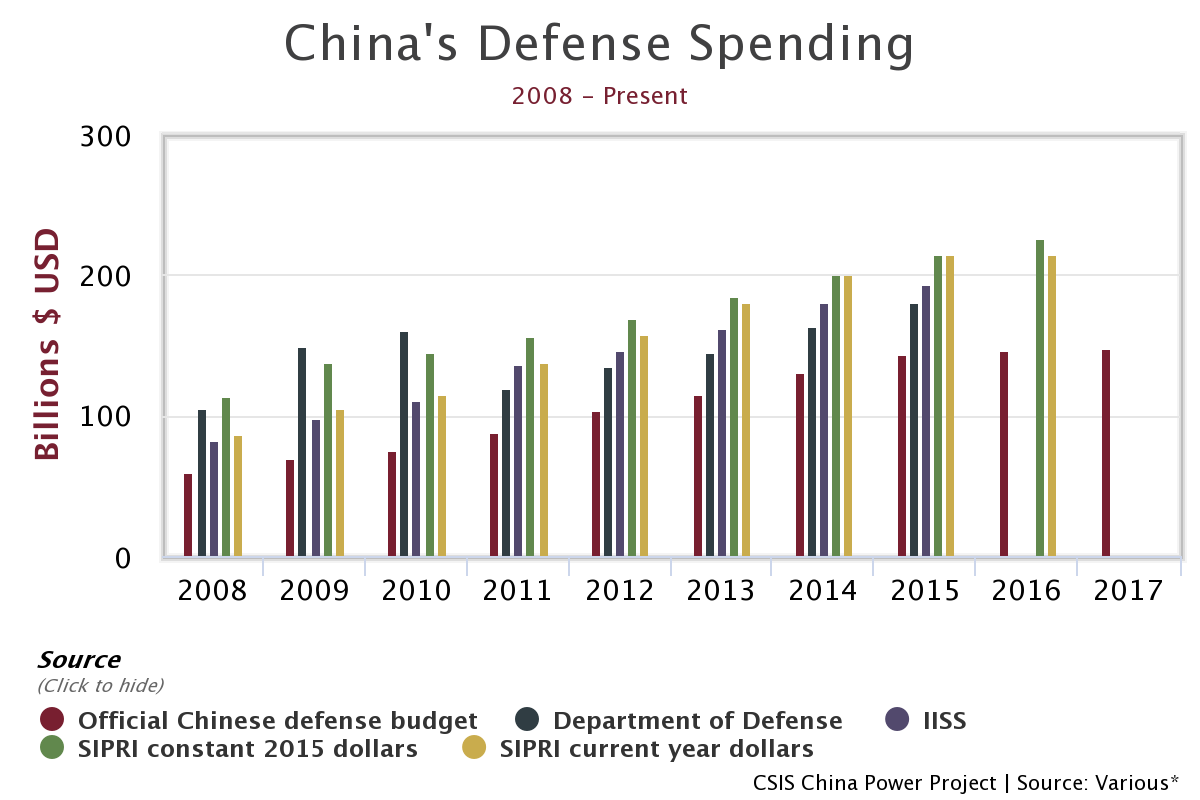
In response, China’s military expansion is almost as astonishing as its economic growth. Since 1989, the budget of the People’s Liberation Army (PLA) has increased an average 9.56% per year though some estimates put the figure much higher.[2] China has the luxury of focusing its military efforts against a single paradigm: the United States Military. In pursuit of parity, the PLA has acquired nuclear weapons, carrier and stealth aviation, modern command and control systems, submarine-launched ballistic missiles, and special operations capabilities. Some believe the Chinese may actually lead the world in cyber, anti-ship ballistic missile technology, and even quantum computing—a capability that could obviate any attempt at communications security. Though the United States Military is a large and robust rival, China’s drive for parity requires only that it learn from the Pentagon’s successes and avoid its mistakes. Accordingly, Chinese officers miss no opportunities to study America’s weaknesses and develop countermeasures. For them, parity is only a matter of time and persistence, something the Chinese are more comfortable with than Americans are. It is not surprising then that the PLA is not just a military force, it also carries political and economic weight within the Chinese system.

chart
This chart illustrates the rapid but steady rise of China’s military budget.

China’s Future: Unite or Ignite?

Unfortunately, China simply cannot sustain the economic growth required to keep it all going. The problem is dire. Even a moderate reduction in the pace of growth will profoundly affect tens of millions of workers. If a contraction stratifies and unbalances China’s economy, the country’s fractures will begin to re-emerge. Income and quality of life will become a matter of struggle between ethnic groups and geographic regions. China’s coastal cities are extremely important to its economy; those in the interior are less so. Profound cultural differences exist between those from the north and those from the south as well as between east to west. Xinjiang and Tibet already dream of an independent future as do some in Hong Kong and of course Taiwan. Igniting rebellion in these places requires only a spark. More profoundly, if the Chinese economy stagnates, there is simply no way to keep 600 million military aged men busy, unified, and politically obedient without expansion and conquest. Economics may thus force China to decide between conflict at home and conflict abroad.

China’s Communist Party leadership is already preparing for this eventuality. Efforts to control information and stamp out dissent serve to inoculate the country against the centrifugal forces that threaten to spin it apart. The PLA appears to have three principal goals: develop a power projection capability, use that capability to solidify control of energy supply lines, and build positive relationships with the Chinese people through disaster response. China recognizes it will need all these things if it decides to embark on a policy of conflict overseas. Though at the moment Beijing pushes its territorial ambitions incrementally, it openly experiments with hard power solutions in the South China Sea, the East China Sea, and elsewhere. Any disruption in the quality of life in Chinese cities like Chengdu may provide an early warning as to whether Beijing will militarize its foreign policy. In the lengthening list of things that Chengdu is becoming, perhaps “canary in the coal mine” is the most significant.

[1] Statistics from the United Nations Children’s Fund (UNICEF).

[2] Figures in constant 2015 US Dollars. Raw data analyzed from the SIPRI database. SIPRI’s data typically exceeds official Chinese government statistics that are believed to be underreported.


Lino Miani is a retired US Army Special Forces officer, author of The Sulu Arms Market, and CEO of Navisio Global LLC.


Future Vision: Europe’s Image Problem

Since the end of the Second World War, Europe has put its security in the hands of supranational organizations. These institutions, whether economic, military, or political, have deterred the wars between states that plagued European security since the Peace of Westphalia in 1648. In that period, the march of uniformed armies decided conflicts and knowing where those armies were and how they were deployed was paramount to victory. For this there is no more powerful tool than an eye in the sky; satellite imagery in the hands of western governments. But today’s security challenges seem to invalidate collective intelligence systems.

Threats today are insidious. The massed armies of old have given way to environmental degradation, terrorism, and “hybrid” military threats designed to operate in the seams within Allied decision-making. Big states like France, Great Britain, and particularly the United States, hold a monopoly on imagery intelligence (IMINT) and distribute it through Allied intelligence structures at NATO and the European Union. With NATO’s Afghanistan mission winding down and a Euroskeptic administration in the White House, the old model of sharing IMINT is no longer flexible, responsive, or reliable enough to address the modern security needs of most European states.

A Transitioning Reality

The end of 2014 marked the transition from NATO’s United Nations-mandated International Security Assistance Force (ISAF) in Afghanistan to Operation Resolute Support. The new mission focuses on building the capability of Afghan structures through training and financial instruments. These efforts are funded via the Afghan National Army (ANA) Trust Fund, the United States Afghanistan Security Forces Fund (ASFF), and the Law and Order Trust Fund for Afghanistan (LOTFA). The reduction of western troop levels and the primacy of Afghan institutions that cannot meet strict and expensive requirements for access to Allied intelligence, has reduced the urgency that previously drove the sharing of IMINT within NATO.

Satellite Imagery
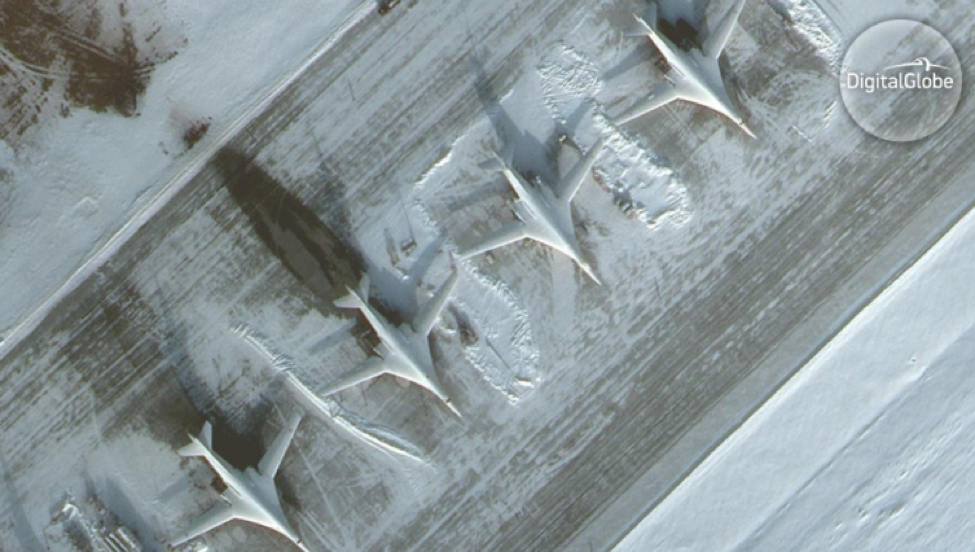
When current and in high-resolution, photos like this one can provide salient intelligence; like the fact that the second Russian bomber (from the bottom) has recently run its engines. Photo Credit: DigitalGlobe – https://twitter.com/DigitalGlobe/status/829404552092905473

The election of Donald Trump may further restrict cooperation within NATO. During his first one hundred days as President of the United States, the Trump Administration made it clear it expects its NATO allies to increase their contributions to the organization. Though this is poorly defined and President Trump appears to be softening his position, intelligence sharing is not likely to increase during his administration leaving European allies to consider available options. Fortunately, advances in technology and the genius of the free market have generated alternatives in what was previously locked in the rarified world of classified military technology.

20/20 Hindsight

Commercial satellite solutions have come a long way since 1962 when the first privately sponsored mission sent the Telstar communication satellite into orbit. Today, high-resolution commercial earth observation and advanced geospatial solutions are useful across the many sectors of defense and intelligence, public safety, map making and analysis, environmental monitoring, oil and gas exploration, infrastructure management, and navigation. These options are inexpensive and rival legacy military capabilities in terms of resolution and coverage. When coupled with geographic information systems and internet technologies such as cloud computing and database management, commercial satellite imagery is a powerful tool in the hands of a growing community of potential clients.

Satellite Imagery
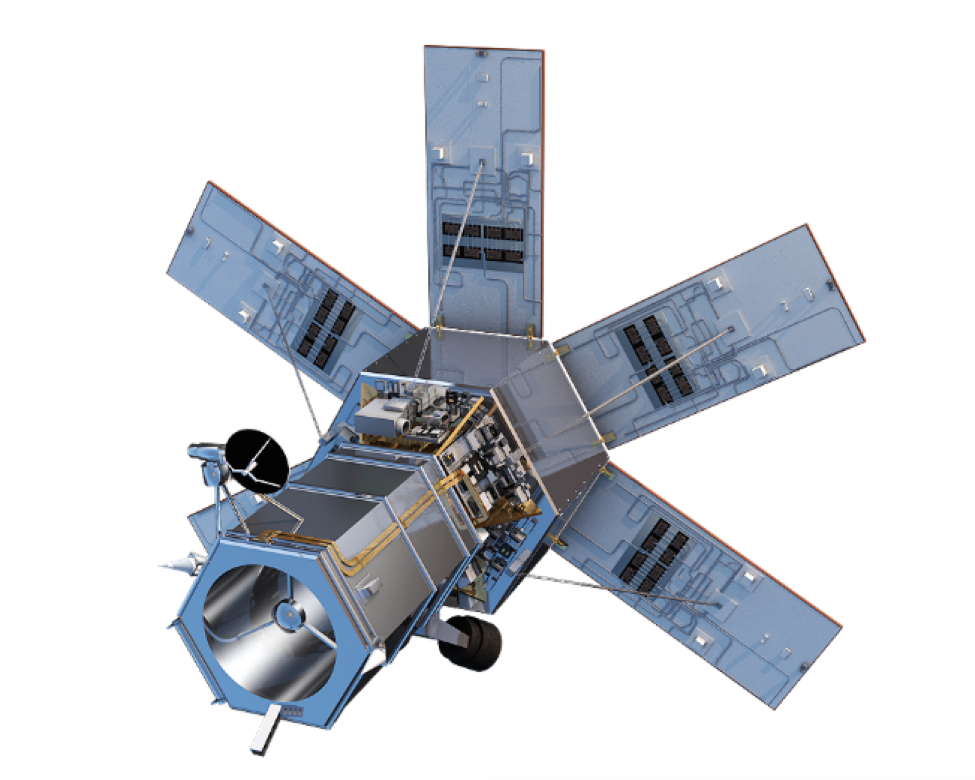
Satellites like this one, DigitalGlobe´s WorldView 4, are among several of the options that may provide European nations with the imagery that they need for the future. Photo Credit: DigitalGlobe – http://worldview4.digitalglobe.com/#/main

Outlook for the Future

The Brexit referendum in the United Kingdom as well as the strong showing of nationalist parties in France, the Netherlands, Hungary, Poland, Greece, Turkey, and the United States are making it harder to implement complex supranational intelligence sharing arrangements. Terrorist attacks and the continuing influx of economic migrants and refugees continues to fuel growing discomfort with the risks inherent in “open door” policies. In this time of crisis, intelligence services, militaries, and police forces are under increased pressure to provide security and have already begun exploring unilateral solutions to the problem. Their task will be impossible however without the right tools for the job.

For now, European imagery comes from the combined abilities of the European Space Agency (ESA), the EU Satellite Centre (EU SATCEN), and the contributions of individual states. European leaders depend upon the abilities of the Copernicus Earth Observation program and the Sentinels to provide them with many of their imagery needs but these are legacy systems. The Copernicus constellation lacks the technological capability of newer commercial satellites like Worldview 4, and the nations are acutely aware of Copernicus’ shortcomings. For those countries lacking a space program or a military IMINT capability of their own, private sector solutions will be an increasingly important component in the defense and security of their nations.


Johnathon Ricker is an account manager with Navisio Global LLC, CEO of Prospective International, and a student of international security, intelligence, and strategic studies.

…Access, experience, and knowledge…Worldwide